

Finding out you’re pregnant brings a wave of emotions, and one of the first practical questions that follows is: when do I see a doctor? Your first prenatal appointment is the beginning of a carefully coordinated plan to support both you and your baby. At Memphis Obstetrics & Gynecological Association, P.C., we’ve been guiding women through this moment for decades, and we want you to walk into that initial visit feeling informed and prepared.
Below, you’ll find what you need to know about what happens at your first OB visit, how to prepare, and how to make the most of your time with your MOGA obstetrician. When you call to schedule, our team will walk you through what to bring, including your insurance card, photo ID, a list of current medications and supplements, your menstrual history (date of your last period), and any relevant medical records. Writing down questions ahead of time helps you remember what you want to ask.
What Is the First Prenatal Appointment?
Your first prenatal appointment is a full initial visit that confirms your pregnancy, establishes a baseline for your health, and sets the stage for the months of care ahead. It’s typically scheduled between 6 and 10 weeks of pregnancy and runs longer than any other prenatal visit, usually one to two hours. During this time, your MOGA physician will review your medical history, perform a physical exam, order lab work, and talk with you about what to expect.
This appointment is more than paperwork. It’s the moment your MOGA caregiver gets to know you, understands your health background, and begins building the trusting relationship that will carry you through pregnancy and delivery. Everything from your due date to your prenatal vitamin plan starts here.
How Your First Prenatal Visit Works: Step-by-Step
Knowing what happens during the appointment helps calm the nerves. Here’s a step-by-step look at a typical first prenatal visit at one of our locations:
- Check-in and intake paperwork. You’ll complete forms covering insurance, personal information, and medical history. Arriving 15 minutes early helps keep things on schedule.
- Urine sample collection. A quick urine test confirms the pregnancy and checks for protein and glucose, both of which give early clues about kidney function and gestational diabetes risk.
- Detailed history review. Your MOGA physician will ask about your medical, surgical, family, and obstetric history. Be ready to discuss past pregnancies, chronic conditions, medications, allergies, and any family history of genetic conditions.
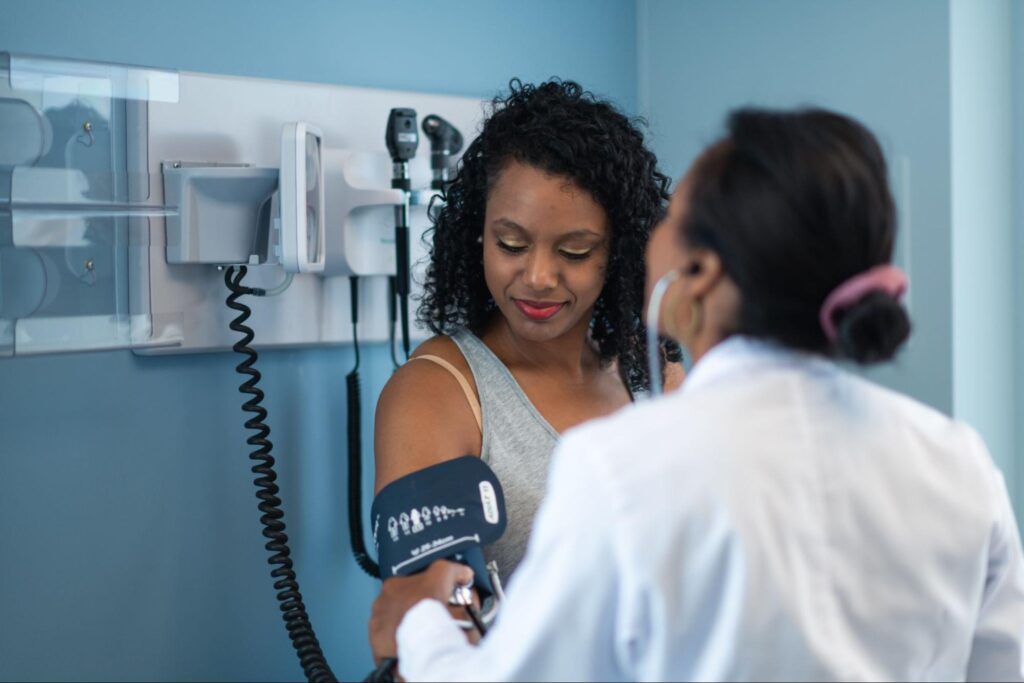
- Physical exam. This includes weight, blood pressure, and a general physical. A pelvic exam and Pap smear may be done if you’re due for one.
- Blood draw. Lab work typically covers blood type and Rh factor, a complete blood count, screening for sexually transmitted infections, and immunity to conditions like rubella and chickenpox.
- Dating ultrasound. Many women receive a dating ultrasound to confirm gestational age, verify a heartbeat, and calculate an accurate due date.
- Counseling and planning. Before you leave, you’ll go over prenatal vitamins, nutrition, exercise, warning signs, and the schedule for upcoming visits.
Benefits of Early Prenatal Care
The sooner you begin prenatal care, the sooner your MOGA obstetrician can identify factors that affect you and your baby. Early care is one of the most meaningful steps you can take for a healthy pregnancy, and it reflects a belief our practice has held for decades: preventive care is still the best care.
Why Does Early Detection Matter?
Catching issues early changes outcomes. Conditions like ectopic pregnancy, thyroid imbalance, or anemia can be caught and managed before they escalate. An accurate due date, calculated by combining your last menstrual period with a first-trimester ultrasound, gives the most reliable estimated delivery date, which guides every decision afterward. Baseline lab results establish your starting point for comparison throughout pregnancy, flagging treatable issues like iron deficiency or infection.
Early appointments also allow for prenatal vitamin and folic acid guidance. According to the American College of Obstetricians and Gynecologists, taking folic acid before and during early pregnancy significantly reduces the risk of neural tube defects. You’ll also get clear direction on diet, exercise, caffeine, medications, and anything else that may affect fetal development.
How Does Early Care Build Provider Trust?
This early visit begins the ongoing partnership with your MOGA caregiver, something our team believes is unique and very special. Beginning care early gives you time to ask questions, think through your preferences, and feel more in control of what’s ahead. You’re not alone in this. The physicians at Memphis Obstetrics & Gynecological Association, P.C. walk alongside you from the first positive test through postpartum recovery, delivering care for women at every stage of life.
Building this trust early means that by the time you reach later trimesters, your MOGA physician already knows your history, your concerns, and your preferences, which helps every appointment feel more personal and informed.

First Prenatal Visit vs. Follow-Up Appointments
Your first visit is unlike any other prenatal appointment you’ll have. It’s longer, more detailed, and covers a wider range of topics. Follow-up visits are focused, shorter, and designed to track your baby’s growth and your well-being over time.
| Feature | First Prenatal Visit | Follow-Up Visits |
|---|---|---|
| Duration | 1 to 2 hours | 15 to 30 minutes |
| History review | Full medical, surgical, family, obstetric | Brief updates only |
| Physical exam | Complete with pelvic exam | Weight, blood pressure, fundal height |
| Lab work | Extensive blood and urine panels | Targeted labs at specific milestones |
| Ultrasound | Often a dating scan | At specific intervals, not every visit |
| Counseling | In-depth lifestyle and planning discussion | Focused questions and updates |
A typical prenatal schedule looks like this:
- Weeks 4-28: Monthly visits
- Weeks 28-36: Every two weeks
- Weeks 36 to delivery: Weekly visits
At each follow-up, your MOGA physician will check your weight and blood pressure, listen to the fetal heart tones, and measure your fundal height. Other screenings fall at specific points, including genetic testing in the first trimester, the anatomy ultrasound around 20 weeks, glucose screening between 24 and 28 weeks, and Group B strep testing near 36 weeks.
Cost and Insurance Considerations
Most insurance plans cover prenatal care as a preventive maternity benefit, meaning the core visits, routine labs, and standard ultrasounds are typically included. Your out-of-pocket cost will depend on your plan’s deductible, copay, and coinsurance structure. Many insurers use global maternity billing, which bundles prenatal visits, delivery, and postpartum care into a single charge.
A few things to keep in mind:
- Extra ultrasounds, genetic testing, and specialized labs may be billed separately.
- Verifying coverage and in-network status before your first visit prevents surprises later.
- Memphis Obstetrics & Gynecological Association, P.C. accepts most major insurance plans, including Aetna, Cigna, Blue Cross Blue Shield, Anthem, United Healthcare, Meritain Health, PHCS Networks, and Mississippi Medicaid.
- Self-pay options and payment arrangements may be available. Our team can help you understand your benefits before your appointment.
Calling your insurance company ahead of time and asking about your maternity benefits is a smart preparation step. Writing down the representative’s name and reference number for your call keeps things organized if questions come up later.
Who Should Schedule a First Prenatal Appointment?
If you’ve taken a positive home pregnancy test, the next step is to call and schedule. Timing matters, and getting on the calendar early helps make sure your first visit happens within the recommended window.
You should schedule a first prenatal appointment if:
- You’ve had a positive home pregnancy test and want confirmation.
- You’re hoping to be seen by 8 to 10 weeks of pregnancy for the standard first visit.
- You have a high-risk history, including diabetes, high blood pressure, thyroid disease, autoimmune conditions, or a prior pregnancy loss. Earlier visits may be recommended.
- You conceived through IVF or fertility treatment and need earlier monitoring.
- You’re 35 or older, where early planning helps address age-related considerations.
- You’re currently taking prescription medications. Don’t stop anything without talking to your MOGA physician first, as some medications are safe and some need adjusting.
If you’re unsure whether your situation calls for an earlier appointment, call us. Our team will help you decide the right timing based on your health history, and we’re here for you from that first phone call through delivery and beyond. As a practice dedicated solely to a woman’s care, we take time with every new expectant mother to make sure her first visit is thoughtful and unhurried.
Frequently Asked Questions
How long does the first prenatal appointment take?
Plan on one to two hours. The first visit covers more ground than any other appointment, including a full medical history, physical exam, lab work, counseling, and often a dating ultrasound. Arriving a little early for paperwork keeps the visit on track. If this is your first pregnancy, give yourself a little extra time afterward too, since you may want to sit with the information before heading back to your day.
Will I have an ultrasound at my first visit?
Often, yes. A dating ultrasound is commonly performed to confirm the pregnancy, check for a heartbeat, and calculate your due date. If it’s very early in your pregnancy, a follow-up ultrasound may be scheduled a week or two later for a clearer view.
Should I bring my partner?
Yes, partners are welcome and encouraged to come along. Having someone with you helps you remember the information shared, offers emotional support, and lets your partner be part of the experience from the beginning. Family members are also welcome.
Do I need to fast before the appointment?
Usually no. The first prenatal visit doesn’t typically require fasting. If a specific test needs you to fast, our team will let you know when scheduling. Eating a light meal beforehand can help prevent lightheadedness during the blood draw.
What should I wear?
Comfortable, loose-fitting clothing works best. You may need to change into a gown for parts of the exam, and loose clothing makes it easier to access your arm for a blood draw and your abdomen for an ultrasound. Flat, easy-to-remove shoes are a smart choice.
What if no heartbeat is detected?
Try not to panic. In very early pregnancy, it can simply be too soon to see or hear a heartbeat on ultrasound. Your MOGA obstetrician will likely schedule a follow-up scan in one to two weeks for a clearer picture. We’ll walk you through every next step with care and clear communication, and your MOGA caregiver will make sure your questions are fully answered before you leave.

Ready to Schedule Your First Prenatal Visit?
If you’ve received a positive pregnancy test, now is the time to call. Scheduling your first prenatal appointment with Memphis Obstetrics & Gynecological Association, P.C. puts you in trusted hands from day one. Our team is ready to answer your questions, verify your insurance, and reserve a time that works for you. Contact us today to begin the care that will support you and your baby through every stage ahead.